
[Infographic] Data-Driven Content Marketing Strategy 101
It’s 2018, so if you’re not using a data-driven content marketing strategy, you’re not doing it right. Whether you’re a novice when it comes to content marketing or an experienced strategist, getting results from your efforts can be tough. Many learn quickly that producing a high quantity of content is simply not enough. With…

Ashley Poynter
— Founder, Content Rewired
On This Page
It’s 2018, so if you’re not using a data-driven content marketing strategy, you’re not doing it right.
Whether you’re a novice when it comes to content marketing or an experienced strategist, getting results from your efforts can be tough. Many learn quickly that producing a high quantity of content is simply not enough. With all the businesses, thought leaders, influencers and everyday people producing more content than ever, it takes truly special content to cut through the noise. But it also takes data.
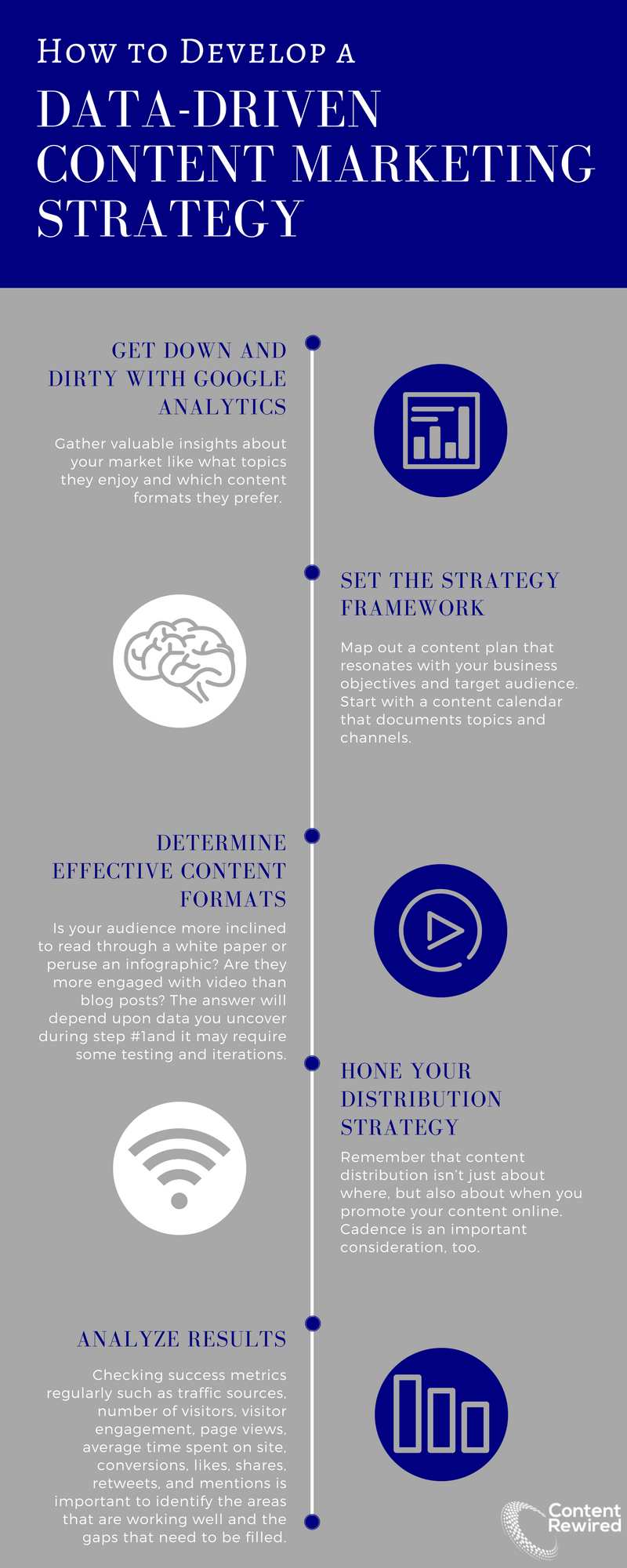
This infographic provides a synopsis of how to develop a data-driven content marketing strategy – something we’ve covered in great depth here. Data-driven content marketing calls for the collection, analysis and application of data about your customers to inform your content marketing strategy. It turns the guessing game into a solid strategy backed by real information about your target audience/buyer.
Armed with this information, organizations can not only create better content, but content that is personalized to meet the needs and answer the most pressing questions of the audience. Here’s how it works:
Step 1: Look at the Data, Befriend the Data
Use a combination of competitor analysis, keyword research, your own analytics, and audience personas to collect as much information as possible.
Step 2: Map Out Your Content Strategy
With some solid data in hand, begin to build the framework for your content marketing strategy, starting with a content calendar.
Step 3: Determine Effective Content Formats
Use data to determine how your audience prefers to consume content and continue to build out the content calendar accordingly.
Step 4: Hone Your Content Distribution Strategy
Use data to determine where and when your audience prefers to consume content and continue to build out the content calendar accordingly.
Step 5: Analyze Results; Test, Tweak, Repeat
Use data to see how well you’ve, well, used data. Once you enact your data-backed content marketing strategy, keep tabs on how it’s performing. You’ll likely need to pivot, adjust, and try new things until you find a recipe that works.
[Infographic] Data-Driven Content Marketing Strategy 101 – FAQ’s
Ashley Poynter
Founder of Content Rewired, a fintech content practice built on twenty years inside payments, treasury, and fintech SaaS. Previously head of content at PaymentWorks. Writes about editorial leadership, AI-enabled content production, and the discipline that separates B2B fintech marketing that compounds from the work that just publishes.
-

FINTECH CONTENT MARKETING AGENCY
How to Write a Fintech White Paper
-

TOOLS & TIPS
Tech Marketing Best Practices for 2024
-

CONTENT MARKETING STRATEGY
6 Mistakes Your Writers Are Making

If this was useful, the newsletter is too.
One essay every other week. No roundups, no engagement bait. Just one substantive argument about fintech content marketing.