

Table of Contents
In a business landscape where every brand is fighting for attention and AI is rewriting what content looks like, authentic storytelling has become one of the most valuable assets a company can have. For Joel Crampton, a fractional Chief Marketing Officer (CMO) and founder of CMO/Alpha, who works primarily with service-based and financial advisory firms, storytelling is the core differentiator that helps his clients rise above the noise.
“People don’t respond very well to bullet points—they like the story,” Crampton says. “Tell me who you’ve helped, what pain points you’ve solved, and whether it’s someone like me.”
Crampton is part of a growing movement of fractional CMOs—senior marketing leaders who provide high-level strategic guidance to multiple companies without the constraints of a full-time role. For many fintech and financial services organizations, this model offers high-level strategic guidance without the cost of an in-house executive.
Building Structure in a Flexible Model
As a member of the CMOx network, Crampton follows a structured process designed to quickly align with each client’s business objectives.
During the first 30 days, he conducts a deep discovery process: “It’s really digging into who that company is, what’s their unique selling proposition, who are their client avatars, what does the competitive landscape look like,” he explains. “I talk to internal and external stakeholders, gather as much insight as possible, and then create a 60- to 90-day strategy that gets everyone moving in the same direction.”
After presenting the plan to leadership, he manages implementation—sometimes through internal teams, other times with outside vendors or agencies—and then continues to oversee progress through weekly check-ins, dashboards, and quarterly reviews.
It’s a rhythm that balances strategy, accountability, and storytelling, a triad that Crampton believes drives sustainable growth. “It’s essentially developing a long-term partnership with the leadership team,” he says. “Eventually, I might even work myself out of a job because the company grows to the point where they hire a full-time CMO. That’s a success story in itself.”
The Role of Fractional CMO Storytelling in Marketing Strategy
While Crampton’s process is data-driven and methodical, he’s quick to note that the heart of effective marketing lies in narrative.
“Storytelling looks different depending on where you use it,” he explains. “It can show up in blog posts, case studies, testimonials, even internal communications. The key is to tell your firm’s unique story—no one else has that exact experience.”
He encourages clients to highlight transformation rather than transaction: focus on who they’ve helped and why that matters. In industries like financial services, where trust and credibility are paramount, this approach builds emotional connection and credibility faster than polished corporate jargon ever could.
According to Crampton, the metrics of success depend on the channel. For social media, he looks at engagement, which might present as comments, shares, and conversations. For email or case studies, he tracks downloads and click-throughs. He also evaluates referral activity: “Are centers of influence talking about you because your story resonates with them and their clients?”
Beyond those metrics, he’s watching how generative search engines—AI platforms like ChatGPT or Perplexity—surface brand content. “If those platforms are picking up your stories, that’s a sign you’re an authority in the space,” he notes.
Authenticity Over Automation
When asked about the biggest storytelling mistakes he sees, Crampton doesn’t hesitate: “Being inauthentic. Using AI to write your stories. People want to hear the good, the bad, the raw.”
In his view, generative AI can be a helpful tool for brainstorming, but relying on it to tell a company’s story strips away the very thing that makes it relatable: human experience.
“People’s BS meters have gone way up in the age of AI,” he says. “If you’re telling your firm’s unique story, no one else can duplicate it. That’s your differentiator.”
His advice is to keep stories real and current. Outdated or over-polished content feels disconnected. Fresh storytelling—through customer success features, founder spotlights, or behind-the-scenes posts—keeps brands human and credible.
Why Fractional CMOs Are Rising Now
The rise of professionals like Crampton reflects a broader shift in the marketing landscape. Companies are seeking flexibility and expertise without long-term overhead. According to the Bureau of Labor Statistics, fractional jobs rose 18% from 2021 to 2022—and have grown by 57% since 2020.
Crampton’s journey into the field mirrors this trend. After two decades in corporate marketing, a round of layoffs pushed him to rethink the idea of “job security.”
“Your W-2 job in a corporation gives you a false sense of security,” he says. “After being laid off several times, I realized I wanted control over my life…to work with the people I choose, on the projects I believe in.”
He launched his fractional CMO business earlier this year, focusing on firms that value strategy and long-term brand building over quick wins. While he admits he’s still early in the journey—“Marketing is a marathon,” he says—he’s already building strong partnerships and meaningful impact.
Fractional CMO Storytelling in an AI World
Looking ahead, Crampton sees storytelling becoming even more critical as AI transforms how people consume and trust content. He emphasizes that storytelling goes beyond outward marketing to operate as a cultural tool. Firms that use internal storytelling to align their teams often perform better externally.
As fractional CMOs become a larger part of the business ecosystem, professionals like Crampton will play a key role in helping companies marry data and narrative, AI and authenticity, and strategy and soul.
“Marketing is marketing, no matter what industry you’re in,” he says. “Storytelling is how firms differentiate themselves.”
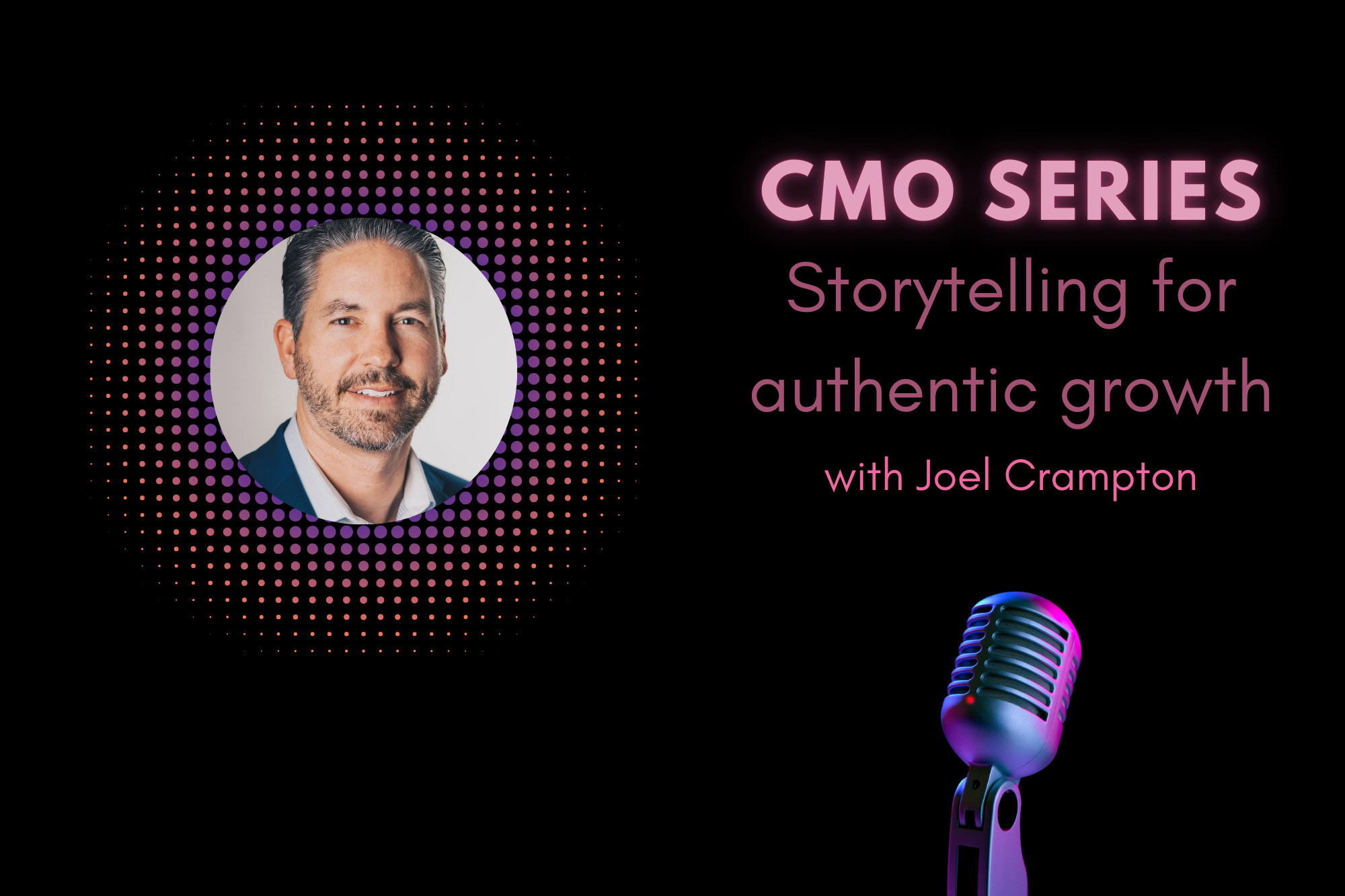
Joel Crampton is a fractional CMO and founder of CMO Alpha, where he helps financial advisors, independent RIAs, and other firms in financial services accelerate growth with strategic marketing leadership and implementation. He pulls from 20+ years of experience leading marketing teams in financial services, fintech, and insurance.
Want More Top Tips on Fractional CMO Storytelling?
Nice! We have some additional resources that might help you round out your fintech marketing program:
- Fintech Demand Generation Playbook
- Fintech Customer Acquisition Playbook
- Knowing When to Hire a Fintech Content Marketing Agency
- B2B Fintech Lead Generation & Marketing During a Recession
- Fintech Marketing Playbook
- Payments Thought Leadership Playbook
- The Financial Marketer’s Guide to Content Marketing